
Kurpu di Mundu
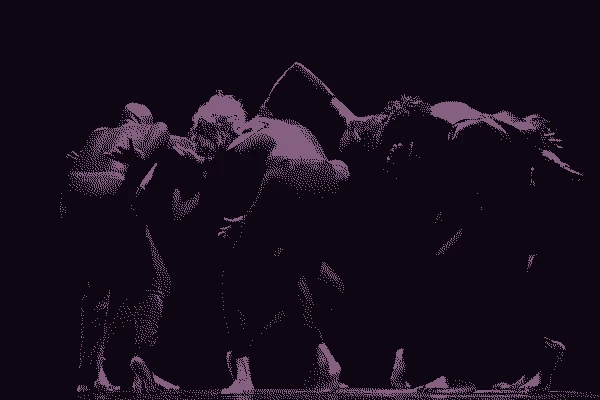
Kurpu di Mundu was the first dance piece I composed sonoplastia (soundscape) for, in collaboration with Pedro Ramos, artistic director, dancer and choreographer of Ordem do Ó.
I hold a particular fondness for this piece, for several reasons:
- it was my first "professional" contact with Ordem do Ó, having been a fan and friend of Pedro's for some years already. It marked the start of a fruitful artistic collaboration that continues to this day. Pedro is a deeply inspiring person, living in a part of the cycle of Samsara tangent to mine, but with one foot already somewhere more spiritual.
- I'd actually first met Pedro in person years before this show, in Guinea-Bissau, where we worked together on another project called Ur-GENTE. In short, it brought several Portuguese artists to Bissau to help local artists create, run and develop programming for a multidisciplinary arts centre. There's much to say about what we experienced there and the people we met, but I'll just note that this is where Pedro's collaboration with Ernesto Nambera began — and from that intercultural dialogue, Kurpu di Mundu was born.
- it was my first opportunity to write music for a context I wasn't performing in myself, seen through the eyes of dance rather than of music.
I tried to preserve the dancers' own voices as much as possible within the sonoplastia, building a bridge between what is bodily, telluric and tactile, and the electronic medium. That tendency has stayed with me, in different forms, throughout all my other collaborations with Ordem do Ó. Using recordings of the artists in rehearsal to feed later acoustic exploration is a kind of recursive endogamy that appeals to me, and that I try to keep alive in various ways. But, as with the other works I've made, I also try to leave room for something new each time. Either way, the roots of my personal compositional style are latent in this piece, and I've left a few excerpts I'm particularly fond of further down this page.
Song
This was the first track I finished, using "worked" recordings of the dancers' voices from a particular rehearsal. I felt that every piece of music should carry something of the artists' creative essence, and this song was the best starting point I could have asked for.
Reich
A clear homage to Steve Reich and the influence he's had on me. Also a chance to blend rhythms born during one of the rehearsals with a more "traditional" compositional approach. It also framed one of the surprisingly rare moments in these soundscapes: pure rhythm, synchronised with dance.
Words
The use of the spoken voice is a leitmotif running through everything I do in sound design and composition. I'm fascinated by the musical power that lives in a word stripped of semantic content, or with that content distorted. So I find myself recurringly asking the dancers to record fragments of text, which I then take great pleasure in distorting until they become clouds of sound.